3 Types Of Dental Implants And Who They’re Best For
Quick Summary
Dental implants are used in three common ways. A single-tooth implant replaces one missing tooth, an implant-supported bridge may replace several teeth in a row without an implant for each one, and an implant-supported denture stabilizes a full arch. Which one fits depends on how many teeth are missing, the condition of the jawbone and gums, and personal goals. Sometimes bone grafting is needed first. An in-person evaluation, not a general description, decides the right plan.
When people search for the types of dental implants, they are usually asking how an implant can be used to fix their particular situation, whether that is one missing tooth, a few in a row, or an entire arch. At Oasis Dental Spa in Frankfort, IL, dental implants are artificial tooth roots placed into the jawbone, and once healed they serve as a stable foundation for a crown, a bridge, or a denture.
The three approaches below differ mainly in what sits on top of the implant and how many teeth it replaces. Who each one is best for depends on your oral health, and only an exam can confirm which fits you.
1. Single-Tooth Implant
A single-tooth implant replaces one missing tooth with a titanium post in the jawbone and a custom crown on top. Over time the post integrates with the bone and creates a stable base, and after healing a custom restoration is attached to complete the smile.
It tends to suit someone who has lost one tooth to decay, injury, gum disease, or a severe fracture and whose neighboring teeth are otherwise healthy. Because the implant stands on its own root, it does not rely on the teeth beside it, and the crown is matched to surrounding teeth in color, shape, and size. Our dental implants page explains the process step by step.
2. Implant-Supported Bridge
When several teeth in a row are missing, an implant-supported bridge uses implants as anchors for a bridge that spans the gap. This approach can replace multiple teeth without needing an implant for every missing tooth, although the exact number and placement of implants depend on your jawbone and your bite.
It is often considered by patients with a few adjacent missing teeth who want a fixed replacement that does not rest on natural teeth. Traditional porcelain bridges are another way to fill a gap, and our team can explain how an implant-supported version compares for your situation.
3. Implant-Supported Denture
For patients missing most or all of the teeth in an arch, an implant-supported denture uses implants to hold the denture more securely than suction or adhesive alone. Dentures may sometimes be combined with dental implants for added stability, depending on oral health and treatment goals.
This type may fit someone who currently wears full or partial dentures and finds them unstable, or someone facing complete tooth loss who wants a more secure option. Our dentures page describes full and partial dentures, which is helpful background if you are comparing both routes.
How the Right Type Is Chosen
The choice follows an evaluation of the teeth, gums, and jawbone using digital X-rays and advanced imaging, and the main questions are how many teeth are missing, where they are, and whether the bone is sufficient. Many adults with healthy gums and adequate jawbone structure may qualify for implants, while others need preparation first.
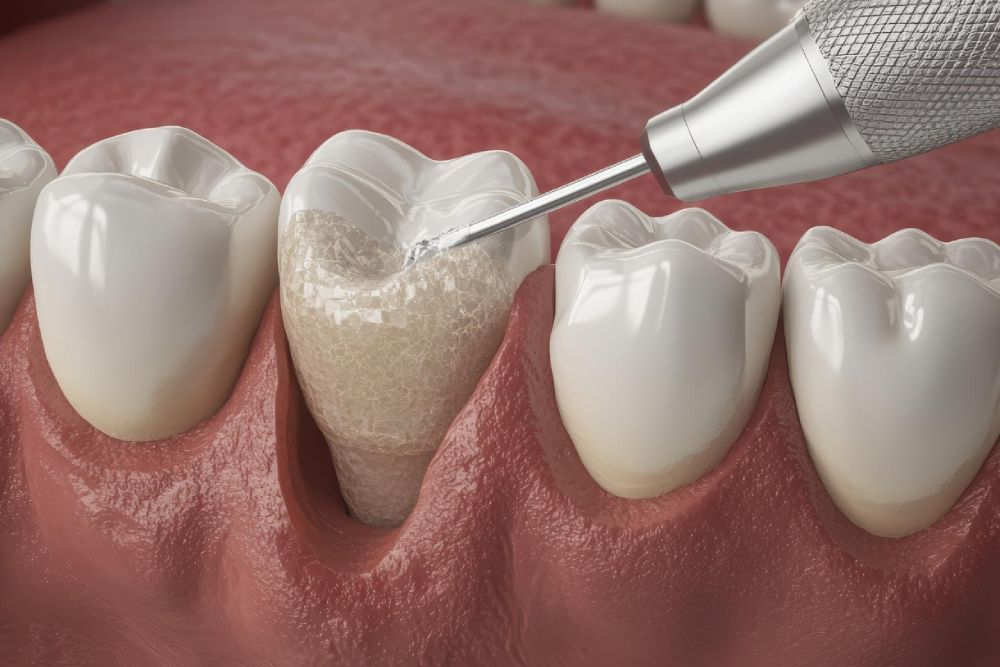
If bone has been lost, bone grafting materials may sometimes be added to repair defects and rebuild the foundation before an implant is placed, and our team discusses that possibility during the exam. Your medical history matters as well, since certain conditions and medications can influence treatment.
What Healing and Aftercare Involve
Whichever type you choose, the implant needs time to integrate with the bone before the final restoration is attached, so treatment is spread over several visits. During that period our team checks how the area is healing and explains how to care for it, and we plan the final restoration around your bite and your smile.
Long-term care matters as much as placement. With good oral hygiene habits and regular dental visits, implants can last for many years, and routine exams let us monitor the implant and the gum and bone around it. Gum disease can still affect the supporting tissues, which is why cleanings stay on the schedule after treatment.
Planning Timing and Payment
Implant treatment is done in stages, with time for healing between placement and the final restoration, so it helps to plan the timeline early. Thursday evening hours and Saturday appointments on the first Saturday of each month make visits easier to fit into a work week.
We also talk through cost before treatment starts. Our office is a Preferred Provider (PPO) for many dental insurance companies, and in-office payment plans are available. Coverage for implants varies by plan, so it helps to bring your insurance details to the first visit. To find out which approach suits you, call Oasis Dental Spa at (815) 469-3900 and schedule an implant consultation.
FAQs
Are all dental implants the same?
The titanium post that sits in the jawbone serves the same purpose in each case, but the restoration attached to it differs. A single crown, a bridge, or a denture can be supported by implants, depending on how many teeth are missing. Our team recommends one after examining your teeth, gums, and jawbone, because individual anatomy varies.
Who is a good candidate for dental implants?
Many adults with healthy gums and adequate jawbone structure may qualify after a dental evaluation. Candidacy is decided on an exam, not on general rules, and your medical history can also play a role. If bone has been lost, additional preparation such as bone grafting may be discussed before an implant is placed.
Can implants replace a full arch of teeth?
Yes. Dental implants may be used to replace single teeth, multiple teeth, or full arches of missing teeth. For a full arch, an implant-supported denture is one way implants are used, and the number of implants depends on your jawbone and your goals, which our team reviews during your consultation.
Do I need bone grafting before an implant?
Not always. Implants need a stable bone foundation, and when bone has been lost, grafting materials may sometimes be added to repair defects. Whether you need it depends on your imaging and exam results. Our team explains your options, the steps involved, and the likely timeline before recommending a treatment plan, so you know what to expect.